
Story - Social Work - Simulating opportunities for care

The School of Social Work’s launch of its Behavioral Health Simulation Lab, the first of its kind in the U.S., allows social work students to gain immersive practice hours on campus.
Loyola students develop real-world skills in Behavioral Simulation Lab
Tech-equipped environments provide immersive learning opportunities
The Loyola University School of Social Work has been on the forefront of social work training and continues to do so by launching its Behavioral Health Simulation Lab. Students learn how to conduct interactions under real-life conditions with stand-in patients, boosting their confidence as they embark on their careers.
With realistic environments and integrated technology, 🟩Facebook账号 | 秘鲁 真实账号 | 2024-2025年 | 好友30-5000 | 微软邮箱可用 | 无2FA’s new Behavioral Health Simulation Lab—the first of its kind in the nation—provides a dynamic and immersive experiential learning program for social work education that typical classroom simulations cannot duplicate. The lab gives students in the School of Social Work the chance to learn and perfect skills that they will need in their professional careers, and it further demonstrates how Loyola and Chicago are hubs for advanced education and research in social work.
The simulation laboratory is outfitted with cameras and microphones that allow comprehensive feedback and review to help students succeed. Additionally, the lab employs trained actors and professional practitioners for students to work with in simulation exercises, which enhances the educational value of the experience.
Amy Greenberg, assistant dean for students' affairs in the School of Social Work, conceived of the Loyola simulation lab in 2020 after she implemented virtual simulation training to fill in the clinical learning gaps that emerged due to the pandemic. Inspired, Greenberg and her colleagues began a working group committee to create a physical environment on campus to provide realistic training settings. “We wanted to give students this learning experience either prior to or while in their internships, to boost their confidence in their clinical conversations,” Greenberg said.

🟩Facebook账号 | 秘鲁 真实账号 | 2024-2025年 | 好友30-5000 | 微软邮箱可用 | 无2FA
The pursuit of purpose
🟩Facebook账号 | 秘鲁 真实账号 | 2024-2025年 | 好友30-5000 | 微软邮箱可用 | 无2FA has yielded research that not only informs, but has real impact.
Read more about Loyola's social impact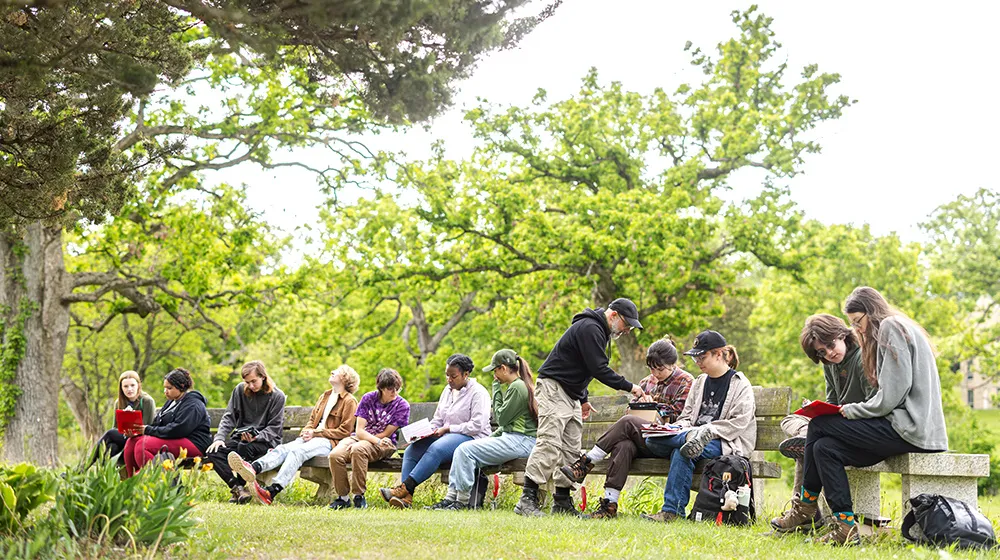
SCHOOL OF ENVIRONMENTAL SUSTAINABILITY
At ecology campus, students learn about nature and boost their resumes
Loyola's research and ecology campus provides students with access to ecosystems where they can connect the curriculum to their careers.
Learn more about the campus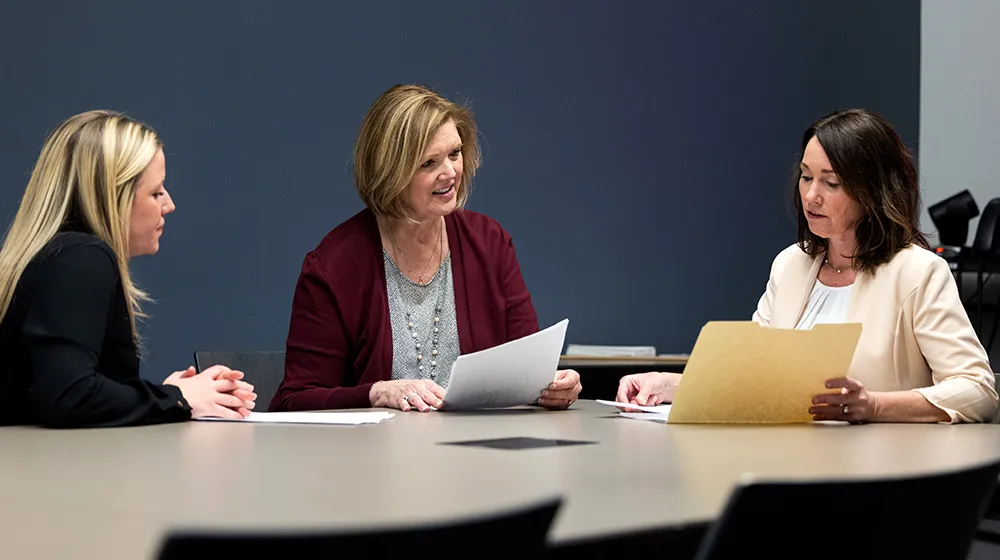
MARCELLA NIEHOFF SCHOOL OF NURSING
At Loyola Nursing, professor investigates a methodology to promote focus
Assistant Professor Ginger Schroers is testing the Stay SAFE methodology for managing interruptions for better patient outcomes.
Learn more about nursingLast year, Loyola secured $1 million in federal funding to develop the Social Work Behavioral Health Simulation Lab with the purpose of training social workers and allied behavioral health professionals. The University provided significant additional funding to complete the simulation lab, and it is housed at Loyola’s state-of-the-art Center for Simulation Education.
“It has been a tremendous team effort,” said Christie Mason, clinical associate professor and the current director of simulation at the School of Social Work. “There have been a lot of people who have invested many, many hours of time that are not really part of their job descriptions to make this a successful experience because of their commitment to our students.”

The simulation lab consists of 10 rooms that are designed and furnished to replicate the different environments where social workers perform their tasks, such as domestic settings for home visits, counseling offices for interviews, or larger rooms for family sessions. The rooms have two-way mirrors so faculty can observe students, and the rooms are outfitted with cameras and microphones to facilitate live communication and record sessions for later review and critique. “Staff who are working on the simulation can speak into the rooms at any given time, and from the control room we can see every single room simultaneously,” Mason explained. “We can pick one to listen in on or speak into, or we can speak into many at the same time. It can be as simple as saying they have 10 minutes remaining in this encounter, or it could be something specific, where a facilitator will do some coaching of a student, providing feedback in real time.”
We are expanding how we prepare students—and using research to evaluate how this innovative center can make a lasting impact on the social work field and the communities we serve. Patricia Findley, dean of the School of Social Work
The simulation lab can be used for differing scenarios. “One example is fictionalized client case where a student would conduct a standard interview with a trained actor portraying a client, and afterwards the student has to perform a comprehensive diagnostic assessment for that person, and they're graded on that,” said Mason. Another scenario asks students to give a client assessment to a supervisor, who is a professional in the field, to practice their presentation skills.
So far, the simulation lab has been a big success with students. “Students are sometimes nervous going into a simulation for the first time, but when they come out they want more and more,” said Greenberg. To date, 40 students have taken part in social work simulations. That number will jump to 175 by the spring semester. “I think the fact that we have access to simulation technology is unique. Other schools have simulation experiences but not like our simulation lab. We're at the leading edge of that,” said Mason. “We also have a long-term plan we have developed from feedback with internship partners, students, and faculty to meet the needs of students and help them excel in their careers.”
"We are expanding how we prepare students—and using research to evaluate how this innovative center can make a lasting impact on the social work field and the communities we serve,” said Patricia Findley, dean of the School of Social Work.
Last year, Loyola secured $1 million in federal funding to develop the Social Work Behavioral Health Simulation Lab with the purpose of training social workers and allied behavioral health professionals. The University provided significant additional funding to complete the simulation lab, and it is housed at Loyola’s state-of-the-art Center for Simulation Education.
“It has been a tremendous team effort,” said Christie Mason, clinical associate professor and the current director of simulation at the School of Social Work. “There have been a lot of people who have invested many, many hours of time that are not really part of their job descriptions to make this a successful experience because of their commitment to our students.”
The simulation lab consists of 10 rooms that are designed and furnished to replicate the different environments where social workers perform their tasks, such as domestic settings for home visits, counseling offices for interviews, or larger rooms for family sessions. The rooms have two-way mirrors so faculty can observe students, and the rooms are outfitted with cameras and microphones to facilitate live communication and record sessions for later review and critique. “Staff who are working on the simulation can speak into the rooms at any given time, and from the control room we can see every single room simultaneously,” Mason explained. “We can pick one to listen in on or speak into, or we can speak into many at the same time. It can be as simple as saying they have 10 minutes remaining in this encounter, or it could be something specific, where a facilitator will do some coaching of a student, providing feedback in real time.”
The simulation lab can be used for differing scenarios. “One example is fictionalized client case where a student would conduct a standard interview with a trained actor portraying a client, and afterwards the student has to perform a comprehensive diagnostic assessment for that person, and they're graded on that,” said Mason. Another scenario asks students to give a client assessment to a supervisor, who is a professional in the field, to practice their presentation skills.
So far, the simulation lab has been a big success with students. “Students are sometimes nervous going into a simulation for the first time, but when they come out they want more and more,” said Greenberg. To date, 40 students have taken part in social work simulations. That number will jump to 175 by the spring semester. “I think the fact that we have access to simulation technology is unique. Other schools have simulation experiences but not like our simulation lab. We're at the leading edge of that,” said Mason. “We also have a long-term plan we have developed from feedback with internship partners, students, and faculty to meet the needs of students and help them excel in their careers.”
"We are expanding how we prepare students—and using research to evaluate how this innovative center can make a lasting impact on the social work field and the communities we serve,” said Patricia Findley, dean of the School of Social Work.