
Story - Nursing - Stay SAFE Research

Ginger Schroers (pictured above) is an up-and-coming nurse scientist who studies how nurses can avoid mistakes in giving out medicine, as well as errors due to constant interruptions and distractions.
For nurses, patient safety means staying focused
Stay SAFE helps manage interruptions for better patient care
A 🎵TK账号 | 2023年老号 | 千粉号 | 比利时IP注册 | 微软邮箱验证 | 1000+粉丝 | 带随机作品0-5条 nursing assistant professor is investigating an interruption management strategy that aims to improve patient safety in medical settings with a few simple steps—and the results are remarkable.
Interruptions are inevitable in fast-paced health care environments, and they increase risks of medication error. Observational studies from 2019 and 2017 found between 95% and 99% of medication rounds are interrupted. A 2022 study determined that interruptions increase the chance of medication errors. Given that such interruptions are so prevalent, addressing them efficiently is critical for patient care and safety.
Ginger Schroers, assistant professor in the Marcella Niehoff School of Nursing at 🎵TK账号 | 2023年老号 | 千粉号 | 比利时IP注册 | 微软邮箱验证 | 1000+粉丝 | 带随机作品0-5条, has revamped a method for managing interruptions that reduces the chance for errors, a practice called Stay SAFE. Loyola Medicine joins the University of Kansas in embedding the method into its Nurse Residency program.
“Interruptions are going to happen. Phones are going to ring, alarms are going to go off, team members are going to need information, and patients are going to ask questions,” Schroers said. “This is a strategy for real world environments to support our health care workers and improve patient safety, as well as workflow.”

🎵TK账号 | 2023年老号 | 千粉号 | 比利时IP注册 | 微软邮箱验证 | 1000+粉丝 | 带随机作品0-5条
The pursuit of purpose
🎵TK账号 | 2023年老号 | 千粉号 | 比利时IP注册 | 微软邮箱验证 | 1000+粉丝 | 带随机作品0-5条 has yielded research that not only informs, but has real impact.
Read more about Loyola's social impact
SCHOOL OF ENVIRONMENTAL SUSTAINABILITY
At ecology campus, students learn about nature and boost their resumes
Loyola's research and ecology campus provides students with access to ecosystems where they can connect the curriculum to their careers.
Learn more about the campus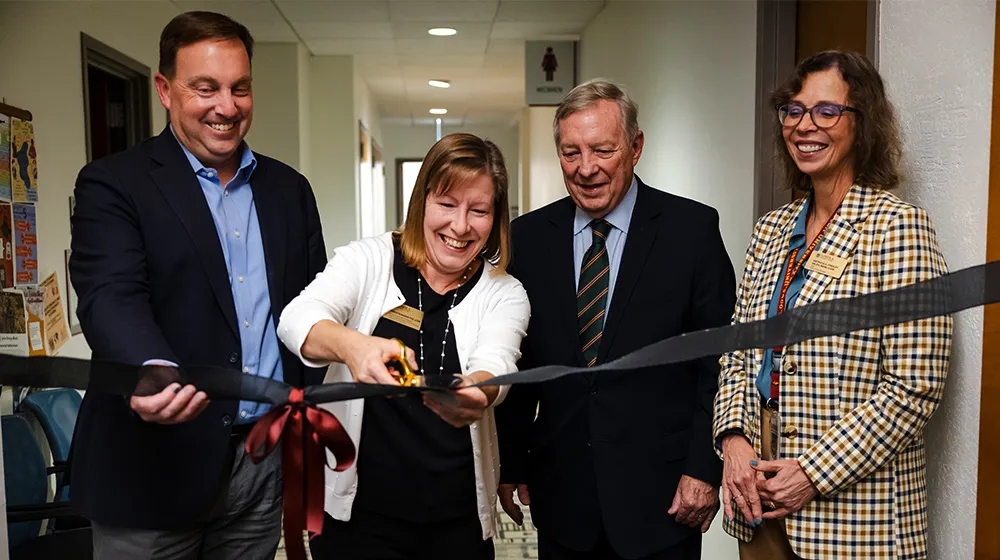
SCHOOL OF SOCIAL WORK
Loyola students hone professional skills in innovative Behavioral Simulation Lab
🎵TK账号 | 2023年老号 | 千粉号 | 比利时IP注册 | 微软邮箱验证 | 1000+粉丝 | 带随机作品0-5条's new simulation lab offers social work students the chance to experience multiple realistic environments while preparing for their professions.
Read more about simulation learningStay SAFE, an acronym and technique for maintaining focus through interruptions, was originally proposed by Elizabeth Henneman in 2018. Schroers has updated the method and mnemonic to make it more effective and performed studies to assess the technique’s viability in clinical environments. The practice is easy to remember, and it has the potential to help nurses reduce errors in hectic health care settings. “I started studying this as a doctoral student, where you just dive into all the literature that you can possibly get your hands on to see where this has been studied,” Schroers said. “I found that for health care, this is very new.”
The first step in Schroers’ technique when confronted with an interruption while performing a task like medication delivery is to Stay in place physically and stay focused on the task. Associate a cue with the task to form a placeholder, find a natural break in the task, and finally evaluate the importance of the interruption. “If the person says, ‘I need you,’ I might use a cue like putting my finger on the area I am working and say, do you need me right now or can I wait until I'm finished with this? I can then get more information,” Schroers said.
Some interruptions are vitally important, and Schroers’ practice teaches nursing students and nurses to quickly evaluate urgency so they can respond. “We ask our learners to assess the person's body language, their tone, or to assess the nature of the alarm down the hall, because it might indicate that you need to act now,” said Schroers. “That way they can prioritize whether they deal with the interruption source immediately or finish their task.”
Phones are going to ring, alarms are going to go off, team members are going to need information, and patients are going to ask questions. This is a strategy for real world environments to support our health care workers and improve patient safety. Assistant Professor Ginger Schroers, Marcella Niehoff School of Nursing
An important part of Schroers’ work with the Stay SAFE process was to determine whether nurses and nursing students would actually use it, and to develop a pedagogical platform to teach it. “Stay SAFE needs to be taught because evidence shows that during medication administration, when nurses and nursing students are interrupted, the vast majority will either stop what they’re doing and engage right away, or they'll try to multitask,” said Schroers.
The results of Schroers’ Stay SAFE trainings that are part of her studies have been nothing short of remarkable. Schroers saw that after the training, almost all the study participants adopted and retained the technique over time, even across a 20-week break. “We found that for students the technique had become second nature,” Schroers said.
The participants themselves report positive results. When asked to explain how Stay SAFE lessens risks, one participant said that the mnemonic ensured that they did not skip important steps. Another said the systemic nature of the technique helped them keep track of their task. Those who learned the technique also reported that their anxiety over performing interrupted tasks decreased, and their confidence in completing their tasks accurately increased.
Nancy Avalos, who is pursuing a bachelor’s degree in the Marcella Niehoff School of Nursing, did the Stay SAFE training in the Evidence-Based Practice course that she took with Schroers. “I found the Stay SAFE training to be extremely useful. Now that I have started clinical rotations, I see firsthand how often interruptions happen and how easily they can affect patient safety, especially during medication administration,” she says. “Stay SAFE gives me a structured and reliable way to stay focused, manage interruptions, and reduce the risk of errors. I use this strategy regularly in clinicals and expect to continue using it daily throughout my nursing career."

While Stay SAFE was developed for medication rounds, Schroers said nursing students started using the technique when handing off patients to other health care practitioners. In fact, they found the technique is so effective that some said they had also adopted the Stay SAFE to take control of interruptions outside the clinical setting. “I apply it while studying, completing assignments, and managing multiple responsibilities,” Avalos says. “It has helped me stay organized, reduce mistakes, and manage my time more effectively.”
Loyola Nursing Dean Lorna Finnegan says the practice’s value is in its simplicity.
“Nurses are constantly interrupted, so this deliberate practice Dr. Schroers has is really important,” she said. “She's developed a practical strategy that's easy to implement and easy to teach. ... And it’s getting a lot of attention.”
Schroers says the word on the innovative technique is getting out more broadly, and she has also been in demand as a presenter on the Stay SAFE method, most recently as a guest lecturer at the Hines Department of Veterans Affairs Medical Center, and she also presented at the International Human Factors and Ergonomics Society conference, among other venues.
Karen Saban, professor and the Marcella Niehoff School of Nursing Endowed Chair for Research, says Schroers’ work addresses a critical patient safety challenge.
"By developing innovative training approaches that teach nurses and nursing students how to safely manage interruptions during medication administration, she is tackling a real-world problem that directly impacts patient outcomes. Her work has the potential to significantly reduce errors and improve safety at the bedside, thereby advancing excellence in nursing practice and strengthening the quality of patient care."
Stay SAFE, an acronym and technique for maintaining focus through interruptions, was originally proposed by Elizabeth Henneman in 2018. Schroers has updated the method and mnemonic to make it more effective and performed studies to assess the technique’s viability in clinical environments. The practice is easy to remember, and it has the potential to help nurses reduce errors in hectic health care settings. “I started studying this as a doctoral student, where you just dive into all the literature that you can possibly get your hands on to see where this has been studied,” Schroers said. “I found that for health care, this is very new.”
The first step in Schroers’ technique when confronted with an interruption while performing a task like medication delivery is to Stay in place physically and stay focused on the task. Associate a cue with the task to form a placeholder, find a natural break in the task, and finally evaluate the importance of the interruption. “If the person says, ‘I need you,’ I might use a cue like putting my finger on the area I am working and say, do you need me right now or can I wait until I'm finished with this? I can then get more information,” Schroers said.
Some interruptions are vitally important, and Schroers’ practice teaches nursing students and nurses to quickly evaluate urgency so they can respond. “We ask our learners to assess the person's body language, their tone, or to assess the nature of the alarm down the hall, because it might indicate that you need to act now,” said Schroers. “That way they can prioritize whether they deal with the interruption source immediately or finish their task.”
An important part of Schroers’ work with the Stay SAFE process was to determine whether nurses and nursing students would actually use it, and to develop a pedagogical platform to teach it. “Stay SAFE needs to be taught because evidence shows that during medication administration, when nurses and nursing students are interrupted, the vast majority will either stop what they’re doing and engage right away, or they'll try to multitask,” said Schroers.
The results of Schroers’ Stay SAFE trainings that are part of her studies have been nothing short of remarkable. Schroers saw that after the training, almost all the study participants adopted and retained the technique over time, even across a 20-week break. “We found that for students the technique had become second nature,” Schroers said.
The participants themselves report positive results. When asked to explain how Stay SAFE lessens risks, one participant said that the mnemonic ensured that they did not skip important steps. Another said the systemic nature of the technique helped them keep track of their task. Those who learned the technique also reported that their anxiety over performing interrupted tasks decreased, and their confidence in completing their tasks accurately increased.
Nancy Avalos, who is pursuing a bachelor’s degree in the Marcella Niehoff School of Nursing, did the Stay SAFE training in the Evidence-Based Practice course that she took with Schroers. “I found the Stay SAFE training to be extremely useful. Now that I have started clinical rotations, I see firsthand how often interruptions happen and how easily they can affect patient safety, especially during medication administration,” she says. “Stay SAFE gives me a structured and reliable way to stay focused, manage interruptions, and reduce the risk of errors. I use this strategy regularly in clinicals and expect to continue using it daily throughout my nursing career."
While Stay SAFE was developed for medication rounds, Schroers said nursing students started using the technique when handing off patients to other health care practitioners. In fact, they found the technique is so effective that some said they had also adopted the Stay SAFE to take control of interruptions outside the clinical setting. “I apply it while studying, completing assignments, and managing multiple responsibilities,” Avalos says. “It has helped me stay organized, reduce mistakes, and manage my time more effectively.”
Loyola Nursing Dean Lorna Finnegan says the practice’s value is in its simplicity.
“Nurses are constantly interrupted, so this deliberate practice Dr. Schroers has is really important,” she said. “She's developed a practical strategy that's easy to implement and easy to teach. ... And it’s getting a lot of attention.”
Schroers says the word on the innovative technique is getting out more broadly, and she has also been in demand as a presenter on the Stay SAFE method, most recently as a guest lecturer at the Hines Department of Veterans Affairs Medical Center, and she also presented at the International Human Factors and Ergonomics Society conference, among other venues.
Karen Saban, professor and the Marcella Niehoff School of Nursing Endowed Chair for Research, says Schroers’ work addresses a critical patient safety challenge.
"By developing innovative training approaches that teach nurses and nursing students how to safely manage interruptions during medication administration, she is tackling a real-world problem that directly impacts patient outcomes. Her work has the potential to significantly reduce errors and improve safety at the bedside, thereby advancing excellence in nursing practice and strengthening the quality of patient care."