
Loyola Law Magazine 2025 - Behind the label

Behind the label
Wine lawyer Jeanne Meyer (JD ’95) navigates the Napa terroir
“There are a lot of people who intentionally try to get into wine law. I was not one of them.”
That’s what Jeanne Meyer (JD ’95) says about how she came to practice law in the wine industry and, in 2018, to found Meyer Wine Law in Napa, California. A career-long real estate lawyer, she has spent the past 23 years representing buyers and sellers of vineyards and wineries.
How did you come to practice wine law?
I began my career in Chicago as a real estate associate at a big law firm. My partner and I moved to San Francisco, where I got a job at a very respected law firm that happened to have a wine practice. We later bought a house in Napa County, where my firm had an office. It was located in a business center that also housed a wine accounting firm, a wine insurance company, a wine bank, and a wine lab. It was a one-stop shop for winery clients.
What makes real estate deals in the wine industry unique?
A lot of people in this industry still consider themselves to be farmers. They are very trusting. They would prefer to do deals on a handshake. A 40-page purchase agreement doesn’t work here; my clients want it in 15.
What “soft skills” are needed to practice in this industry?
Every client wants to do something to differentiate themselves, so in every transaction, I need to be a good listener and creative problem solver. Also, everybody knows everybody in this industry—they’re all neighbors—so success depends on getting along with other people. My clients want me to get the deal done and be nice doing it.
“Everybody knows everybody in this industry—they’re all neighbors.” Jeanne Meyer
How’s the current climate of the wine industry?
It’s a really difficult time right now. For one, the industry has not done a good job of marketing to young people, who are more sober-curious or are choosing competitive products, like hard seltzers. The industry has also emphasized “premiumization,” which appeals to wealthy people, but leaves 20-somethings behind.
Then there’s the issue of tariffs, which have caused a lot of uncertainty. Many materials used in winemaking come from outside the U.S., and reciprocal tariffs will almost certainly impact the export of California wines to some of our biggest markets, like Canada.
There’s also concern around immigration, because so many vineyard workers are from Mexico—some here legally, some not—and there aren’t many other people who want, or are able, to do that work.
So, I think this year is going to be a busy one for me, but not in a good way. Clients I care about are going to have to sell properties at price points that are far from ideal.
What’s the best part of working in this area?
Every winery wants to be unique. It’s just the way it is. I love the variety of issues clients bring me. I love helping them solve a complex problem. It’s fun for me to help make all the pieces of someone’s unique vision fit together.
And the holiday gifts from my clients are pretty great, too. –Liz Miller (August 2025)
Loyola Law Magazine 2025

A 360-degree approach to immigrant justice
Loyola’s new Holistic Immigration Hub will prepare more effective immigration lawyers while working for systemic change
Read the story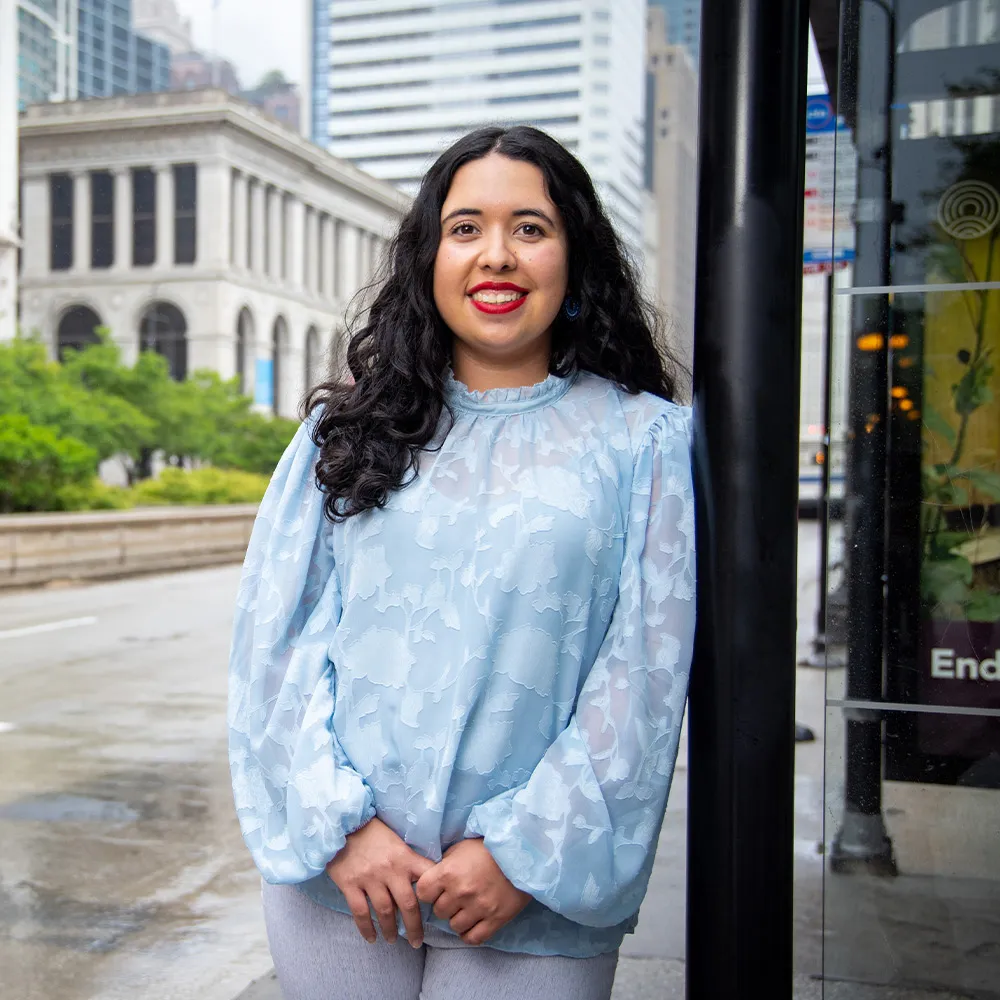
Prep school
Education Law and Policy Institute alumni make their way in a complex field
Read the story

Celebrating excellence
School of Law awards honor Megan Fahey Monty, Fred Lane, Mary Meg McCarthy, and Paul Vickrey
Read the story“There are a lot of people who intentionally try to get into wine law. I was not one of them.”
That’s what Jeanne Meyer (JD ’95) says about how she came to practice law in the wine industry and, in 2018, to found Meyer Wine Law in Napa, California. A career-long real estate lawyer, she has spent the past 23 years representing buyers and sellers of vineyards and wineries.
How did you come to practice wine law?
I began my career in Chicago as a real estate associate at a big law firm. My partner and I moved to San Francisco, where I got a job at a very respected law firm that happened to have a wine practice. We later bought a house in Napa County, where my firm had an office. It was located in a business center that also housed a wine accounting firm, a wine insurance company, a wine bank, and a wine lab. It was a one-stop shop for winery clients.
What makes real estate deals in the wine industry unique?
A lot of people in this industry still consider themselves to be farmers. They are very trusting. They would prefer to do deals on a handshake. A 40-page purchase agreement doesn’t work here; my clients want it in 15.
What “soft skills” are needed to practice in this industry?
Every client wants to do something to differentiate themselves, so in every transaction, I need to be a good listener and creative problem solver. Also, everybody knows everybody in this industry—they’re all neighbors—so success depends on getting along with other people. My clients want me to get the deal done and be nice doing it.
How’s the current climate of the wine industry?
It’s a really difficult time right now. For one, the industry has not done a good job of marketing to young people, who are more sober-curious or are choosing competitive products, like hard seltzers. The industry has also emphasized “premiumization,” which appeals to wealthy people, but leaves 20-somethings behind.
Then there’s the issue of tariffs, which have caused a lot of uncertainty. Many materials used in winemaking come from outside the U.S., and reciprocal tariffs will almost certainly impact the export of California wines to some of our biggest markets, like Canada.
There’s also concern around immigration, because so many vineyard workers are from Mexico—some here legally, some not—and there aren’t many other people who want, or are able, to do that work.
So, I think this year is going to be a busy one for me, but not in a good way. Clients I care about are going to have to sell properties at price points that are far from ideal.
What’s the best part of working in this area?
Every winery wants to be unique. It’s just the way it is. I love the variety of issues clients bring me. I love helping them solve a complex problem. It’s fun for me to help make all the pieces of someone’s unique vision fit together.
And the holiday gifts from my clients are pretty great, too. –Liz Miller (August 2025)