

Rethinking TIF Districts
Equitable Policy Choices for Chicago
Rethinking TIF Districts: When the Model Falls Short
READ THE FULL REPORT (PDF)
Tax Increment Financing has been Chicago's primary tool for neighborhood investment for decades. The premise: capture future property tax increases within a district and reinvest them locally. In some neighborhoods, it has generated substantial resources. For communities facing long-term disinvestment, the structural limits of the tool become a compounding problem, generating the least revenue precisely where the need is greatest.
The results vary widely across the city. South Chicago has operated under two TIF districts for over twenty years. This report examines what those districts have produced, what they have not, and what a more equitable approach to neighborhood investment would require.
The inequity is structural. It is built into how TIF generates revenue.
Key Findings & Data Snapshot
Access a concise, data-driven overview of how TIF has performed in South Chicago. This snapshot covers key findings on revenue gaps, structural inequities, and their implications for neighborhood investment.
South Chicago's Reality
TIF REWARDS GROWTH. In neighborhoods where unemployment is high, population is declining, and property values lag, it produces less, widening the gap between what communities need and what the tool can deliver.

The tool rewards growth, not need
South Chicago’s unemployment rate stands at 16.5%, twice the city average of 8.2%. The neighborhood’s population has declined 21% since 2000. These conditions suppress the property value growth that TIF depends on, limiting revenue in the neighborhoods most in need of investment.
Housing relief has not arrived
More than 55% of South Chicago renters remain cost-burdened. Foreclosure rates during the 2008 crisis were nearly double the citywide average. Two TIF districts have been in place throughout this period. The affordable housing crisis has persisted alongside TIF investment.

Spending has not reflected community planning priorities
Nearly half of South Chicago TIF expenditures from 2000 to 2023, 45.8%, went to public works and infrastructure. Only 19% went to rehabilitation of existing buildings. Job training received 0.2% of total expenditures over the entire life of the TIF. These allocations reflect the structure of allowable spending categories, rather than a community-driven investment plan.
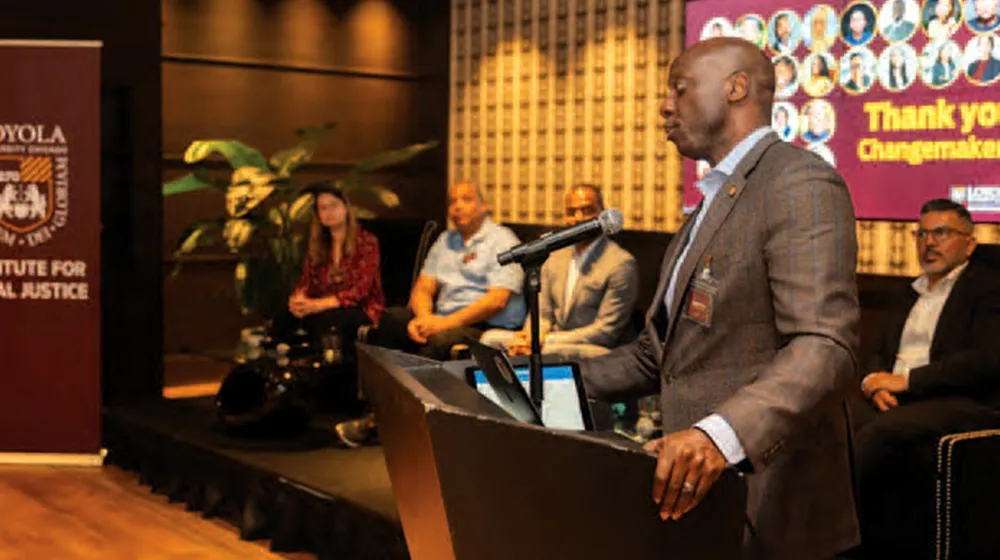
You only generate increment where property values are going up, and frequently the places where [housing money] is most needed are the places where the least amount of dollars are being generated. DANIEL HERTZ, FORMER DIRECTOR OF POLICY, CITY OF CHICAGO DEPARTMENT OF HOUSING
A Path Forward
CHICAGO IS ALREADY PIVOTING. A $1.25 billion housing and economic development bond signals that city leaders recognize TIF alone cannot close the gap. But TIF will remain part of Chicago’s financing structure, and both South Chicago districts face pending extension decisions. How those extensions are designed, and what conditions are attached, will determine whether the next decade looks different from the last two.
Recommendations
For Local Community Organizations
Claretian Associates has completed a South Chicago Quality of Life Plan, organized around seven community-defined pillars. The priority now is ensuring TIF extension funds, particularly from the recently renewed South Chicago TIF, are aligned with the plan’s goals and that investment decisions reflect the community process that produced it. Build direct relationships with staff at the Department of Housing and the Department of Planning and Development, beyond aldermanic offices, to stay connected to funding opportunities as they emerge.
For the City of Chicago
Codify equitable TIF evaluation criteria into law to ensure they outlast any single administration. Require meaningful community engagement in all redevelopment plan creation. Reform the reimbursement-based funding structure to expand access for small and minority-owned businesses. Prioritize the proposed Small and Emerging Business Revolving Loan Fund as a concrete next step.
For the State of Illinois
Revise the TIF Act to allow more flexible uses, including workforce development and non-capital investments. Provide consistent economic development funding that centers racial equity and reduces the conditions that led Chicago to over-rely on a single tool for decades.
For Private Sector and Philanthropic Partners
Align investments with community-driven plans. Commit to sustained partnerships that build shared accountability. When major investments are planned for South Chicago, including the Illinois Quantum and Microelectronics Park at the former USX site, center community residents in the process from the start.
For Universities and Research & Policy Organizations
Move beyond consultant-client models and into sustained partnerships with community groups and public agencies. Align research with community-defined priorities from the start. This report reflects that model, and it is replicable.
Research and Practice in Action
When community priorities come first and public, private, and philanthropic partners align their resources accordingly, progress becomes more sustainable and equitable.
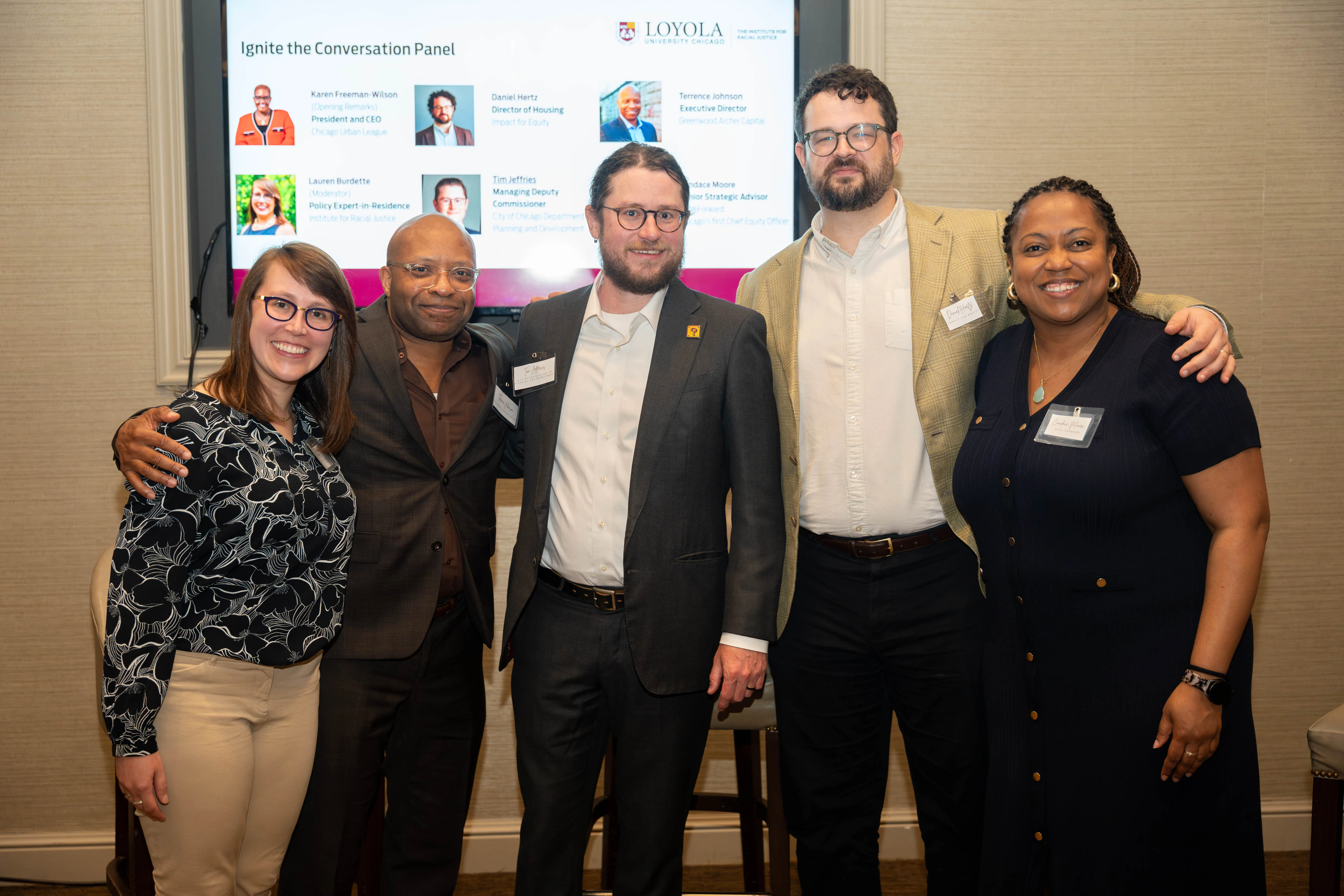
Why Chicago’s TIF System Isn’t Working for South Side Neighborhoods
by D. Amari Jackson
A profile of IRJ Senior Advisor Lauren Burdette traces her journey from city government to IRJ, highlighting how her experience inside decision-making systems shapes research that connects policy, community insight, and real-world impact.

Hope in Increments: The Elusive Promise of TIF in Chicago
by D. Amari Jackson
A grounded look at Chicago’s TIF system reveals how a tool meant to drive equitable development often reinforces inequality, leaving South Side communities underfunded while wealthier areas continue to benefit from disproportionate investment.
After 20 Years, South Chicago TIFs Show Limits of a Core Development Tool
May 11, 2026
A new release from Telegram 巴西+55 API链接 精养1年 成品号’s Institute for Racial Justice highlights findings from IRJ’s latest report examining how Tax Increment Financing operates in communities facing long-term disinvestment. Centered on South Chicago, the project brings together community knowledge, policy analysis, and research translation to explore how structural inequities shape investment outcomes and what more equitable development could look like moving forward.
This report, Rethinking Tax Increment Financing in Chicago, was produced by the Institute for Racial Justice at Telegram 巴西+55 API链接 精养1年 成品号 as part of IRJ’s research-to-policy model, which translates rigorous analysis into public understanding and actionable insight. The work draws on the South Chicago Quality of Life Plan and was developed in partnership with Claretian Associates, with support from Fifth Third Bank.