
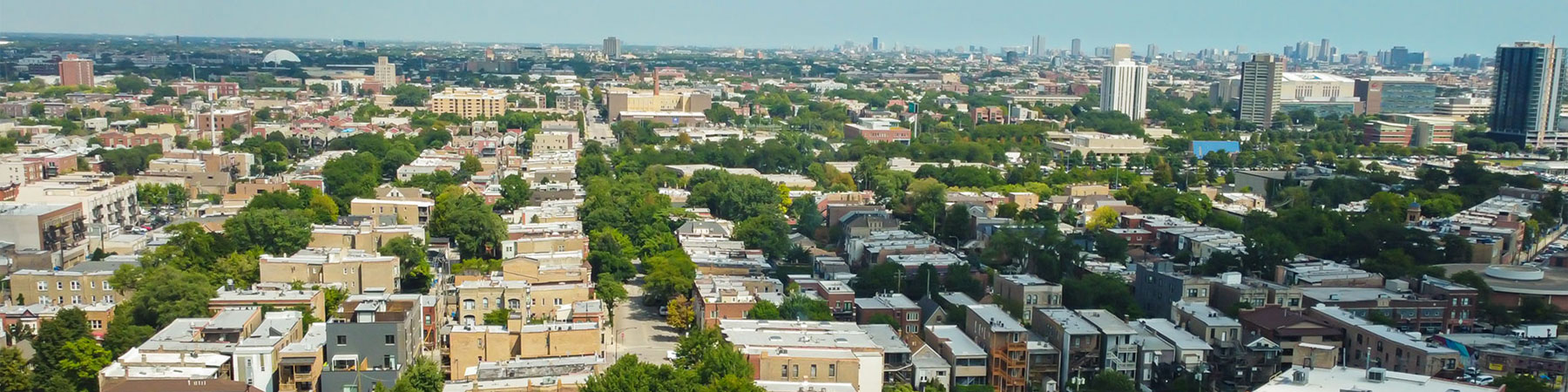
Place Based Investing
Chicago’s Next Economic Playbook Is Being Written in Long-Disinvested Neighborhoods
From North Lawndale to Austin to Greater Grand Crossing, new placebased investments are bringing jobs, training, and capital closer to home.
Economic momentum rarely announces itself.
It becomes visible where work is happening: in repurposed buildings, cranes over long-idle sites and employers choosing to locate closer to where people live, strengthening access to a reliable workforce. On Chicago’s South and West sides, that shift is underway.
You can see it in the details: lights on, a staffed facility, people coming and going each day. These are the markers that work is happening and can continue there.
For residents, it means opportunities closer to home. For other employers and investors, it signals something else: this is a place where talent exists, operations can succeed and growth is already underway. Over time, a single employer’s commitment can catalyze a broader ecosystem, drawing workforce partners, service providers and capital to places long overlooked. This reinforces the idea that economic opportunity does not have to travel far to take hold.
Across Chicago, positive signs are evident in neighborhoods that for decades saw far less investment than their population and economic potential warranted. In communities such as North Lawndale, Austin and Greater Grand Crossing, community leaders, corporations, investors and philanthropic institutions are aligning around local economic development. Known as place-based investment, or PBI, the approach uses capital investment, job creation and local leadership to build on existing neighborhood infrastructure and expand opportunity from within. In Chicago, the model has taken shape over several years and has proved durable through shifts in ownership, market cycles and investor participation.

Kenneth Escoe, executive vice president of specialty products at Illinois Tool Works Inc., Darnell Shields, executive director of Austin Coming Together and Eric Smith, vice chairman of BMO, at the Aspire Center, where place-based investment is helping anchor local growth in Austin.
Supporters across the private, public and philanthropic sectors increasingly view these efforts as scalable and replicable because they connect employers to a ready workforce, improve operating efficiency and create tangible value for both companies and communities.
Four examples across the city, including Xchange Chicago, Cinespace Studios Chicago, Fillmore Linen Service and the Aspire Center for Workforce Innovation, suggest that Chicago’s sustainable economic strategy is not being written in boardrooms alone. It is being written where real work is happening: in neighborhood training rooms, repurposed industrial buildings, production campuses and employer-led partnerships that bring jobs and investment closer to home. Each is anchored by local leadership, corporate investment and patient capital that create job pipelines.
Greater Grand Crossing
Building a Technology Workforce Pipeline
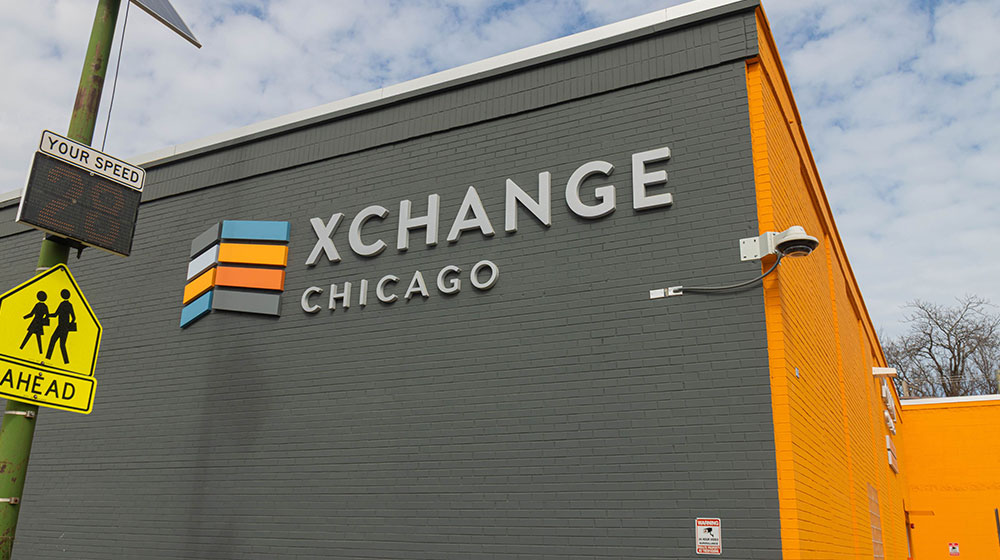
On the South Side in the Greater Grand Crossing neighborhood, Xchange Chicago is connecting neighborhood talent to one of Chicago’s fastest-growing sectors.
Founded by the Comer Science and Education Foundation, P33, SDI Presence and local community partners, Xchange Chicago fills a critical gap in the city’s tech and IT ecosystem. Its model expands workforce opportunity and neighborhood economic growth by training residents for tech roles and placing them directly into part-time or full-time apprenticeships with SDI immediately after they complete the program. Training partners provide technical and professional skills development, while community organizations from the Gary Comer Youth Center to Operation Neighborhood Safety anchor the effort in the neighborhood.
Since its launch, the program has trained and hired more than 70 apprentices, with roughly 80% coming from the surrounding community, generating more than $3.25 million in family-sustaining wages and benefits.
For Jarquetta Egeston, managing director of Xchange Chicago, the effort begins with a clear observation.
“Talent exists in every neighborhood in Chicago,” she said. “It’s just that opportunity doesn’t.”
In November 2025, Xchange opened the 28,000-square-foot technology business hub at 7247 S. Chicago Ave., a $20 million, first-of-its-kind onshore IT services center. At the center’s ribbon-cutting, Chicago Mayor Brandon Johnson called Xchange “a dynamic career pathway and economic opportunity” for South Side residents. The city of Chicago backed the facility with a $5 million community development grant and SDI Presence has committed to a 10-year lease. The Walton Family Foundation and Siegel Family Endowment added a $500,000 grand prize through the Learning Landscapes Challenge to strengthen tech education and career pathways for youth. The building also serves as a multitenant community hub, with United Way of Metro Chicago among its tenants.
The model is designed to redirect IT spending that has historically left the local economy, often going offshore, back into South Side communities through managed services, enterprise IT deployments and infrastructure project work staffed by locally trained talent. That shift is not symbolic. It is operational. SDI’s corporate clients already bearing it out include Peoples Gas, Northern Trust, Aon and the city of Chicago, all of which plan to expand their involvement.
Collaborators with EY added that they see the value of talent flowing through Xchange as teams help meet critical technology implementation needs for a major client transformation.
“We are going to get loyal, dedicated, very tenacious employees,” said Hardik Bhatt, CEO at SDI Presence. “That's another reason why we want to be here, so we can source talent locally.”

Greg Mooney, president of the Comer Science and Education Foundation, Jarquetta Egeston, managing director of Xchange Chicago, Brad Henderson, CEO of P33 and Hardik Bhatt, CEO of SDI Presence, at Xchange Chicago, focus on technology workforce development.
For Brad Henderson, CEO of P33, a non-profit organization dedicated to driving technological and inclusive economic growth, the strategy reflects the way companies now think about talent.
“For decades, many companies offshored their work to places like India and the Philippines because the tasks felt modular – easy to separate from the core business and manage at a distance,” Henderson said. “But technology has shifted that equation. What companies need now are people who understand their business, can sit with teams daily, solve complex problems and adapt quickly. Local talent matters more than ever; trying to build something as dynamic as a financial product across 15-hour time difference is no longer sustainable.”
That combination of anchored employer demand, long-term occupancy and project-based revenue gives Xchange durability beyond a one-time workforce program. Leaders see it as part of a lasting neighborhood operating model, positioned near emerging economic anchors like the Obama Presidential Center, the Shine Bright Community Center and the planned Illinois Quantum & Microelectronics Park.
North Lawndale
Jobs and Community Investment Rebuild an Economic Corridor
In North Lawndale, two very different employers are proving a similar point: when real work is rooted locally, neighborhoods can become talent engines rather than talent export zones.
For decades, opportunities in many parts of Chicago lived elsewhere. Creatives like Jason Smith of North Lawndale can testify.
Smith had always been drawn to visual storytelling. Growing up on Chicago’s West Side, he experimented with cameras and editing software and followed filmmakers he admired. However, for many young people raised in neighborhoods historically disconnected from the city’s major industries, the film business felt distant. It was something that happened somewhere else in Chicago.
But he found a pathway into Chicago’s film industry through a workforce training program connected to Cinespace Studios Chicago, just minutes from his home. Cinespace connects neighborhood talent to Chicago’s film industry
“Honestly, I took it as I’m being paid to learn,” Smith said of his first experience working on a professional production set.

Through the CineCares program, he began learning the craft of film production, starting in grip work and gradually moving toward the camera department. Film shoots can stretch twelve hours or longer, but the pace only deepened his interest.
“What you put into it is what you get out,” Smith said. “You can do your job, or you can pay attention and learn everything happening around you.”
Just a short distance from where Smith grew up sits one of Chicago’s most unusual economic engines. Cinespace Studios Chicago, one of the largest film production campuses in North America, where shows like Chicago Fire, Chicago Med and Chicago P.D. have spent more than a decade building a workforce pipeline designed to connect residents from surrounding neighborhoods to careers in film and television.
For Michael Scott Jr., Vice President of Government & Industry Relations at Cinespace and a former Chicago alderman, the premise is simple.
“If you can’t see it, you can’t be it,” Scott said. “The tax incentive brings the productions, but the real opportunity is the talent right here in our neighborhoods.”
That combination – deep infrastructure, a competitive tax incentive and a robust local workforce-- is what sets Chicago apart from other production hubs like Atlanta and Toronto. Chicago is home to one of the most concentrated production ecosystems in the country, with more content being created in a single location than anywhere else, Scott said. The scale matters. It lowers costs for producers, sustains year-round work for crews and creates consistent on-ramps for young people entering the industry. Unlike jurisdictions where incentives operate independently of workforce strategy, Chicago’s structure rewards production for hiring locally, making talent development a business advantage rather than a side benefit, he added.

Michael Scott Jr., vice president of government and industry relations at Cinespace, Jason Smith, and Debra Wesley, president of Sinai Community Institute, share a conversation at Cinespace Studios Chicago.
Cinespace itself reflects that long-term view. The studio traces its roots to the Mirkopoulos family, Greek immigrants who began repurposing industrial buildings in Toronto in the late 1960s and later transformed some of them into film studios in the 1980s. The family expanded the model to Chicago in partnership with their nephew, Alex Pissios, founding Cinespace Chicago in 2010 and ultimately building the largest independent movie studio outside Hollywood. Even after the studio was acquired by TPG Real Estate Partners in 2021, its family-driven ethos remained central, including its longstanding commitment to community investment.
Participants receive hands-on training while gaining exposure to career paths in lighting, camera operation, set construction and other film trades that support thousands of jobs generated each year on productions filmed at Cinespace. Many of those jobs fall under film industry unions such as IATSE Local 476 or Local 600 and offer wages, pensions and benefits that can support long-term economic mobility.
But access alone does not guarantee success.
The program partners closely with community organizations to ensure participants have the support systems needed to navigate the demands of the industry.
Debra Wesley, President of Sinai Community Institute, has worked with Cinespace since it first opened its doors and says that preparation must address more than technical skills.
“A lot of our young people have experienced trauma,” Wesley said. “If we don’t prepare them and understand what they’re carrying, you’re going to see it show up on production. Our job is to look at the whole person.”
Sinai helps screen and support program participants while also helping stabilize the personal circumstances that can affect success on set, including childcare needs, transportation and financial pressures.
The results have been promising. Of roughly 129 participants who have gone through the program, about 90 percent complete it and roughly 75 to 80 percent find work in the industry.
For Scott, the benefits extend beyond individual careers.
“If you invest in young people and in the community, you’re going to reap the benefits,” he said.
As production volume has grown, so has the need for a reliable, locally based crew that can support continuous filming schedules. That demand has pushed Cinespace to expand and deepen its workforce pipeline over time, ensuring talent supply keeps pace with production activity.
***
Also in North Lawndale, not far from Cinespace, a once-vacant industrial site now houses the Fillmore Center, anchored by Fillmore Linen Service. It is a shining example of steady collaboration, intentional investment and service differentiation.
The facility was built to solve a straightforward operational challenge: bringing hospital linen services closer to the institutions that rely on them. Beginning with Rush University Medical Center as its anchor customer, Fillmore Linen Services processes millions of pounds of medical linens locally. The linen was once handled in Wisconsin, so moving the service to Chicago meant more jobs and less environmental impact thanks to reduced truck transit and water-efficient machines at Fillmore. The facility now employs more than 175 workers, providing living wage jobs while serving major institutional clients across the region. But its importance extends beyond payroll.
The project grew out of a community-driven quality of life planning process led by the North Lawndale Community Coordinating Council. Residents gathered in meetings of hundreds of people to define priorities for their neighborhood’s future.
The goal was not simply development. The goal was restoration. Leaders wanted to rebuild an economic ecosystem that had slowly eroded after decades of disinvestment.
For Cliff Barber, CEO of Fillmore Linen Service, the lesson has been straightforward. The workforce was always there.
“When you pay attention to the person and give them the support they need,” Barber said, “you get all sorts of commitment and productivity that you didn’t even know was there.”
Companies facing labor shortages are starting to notice.
“Our competitors have labor shortage problems,” he said. “We don’t have that problem.”
That local talent edge is now shaping the company’s next chapter. With a workforce drawn from the neighborhood and operations built to serve major health systems, Fillmore recently secured a new award from Endeavor Health for roughly 20 million pounds of linen annually. The added volume pushes the company closer to full operational sustainability and requires more capacity, including people and machines. Fillmore plans to hire 150 additional employees and build a second facility in North Lawndale, expanding production while keeping opportunity rooted where the work happens.
For Pat Ford, president of the Steans Family Foundation, Fillmore represents part of a much longer strategy to repair what she calls a deeper fracture.
“At the heart of this work is closing what I call the human value gap,” Ford said. “Too many communities in our country have been treated as if their people are worth less.”
In business terms, North Lawndale offers something more companies are beginning to recognize: a workforce pipeline that is close to home, responsive to employer needs and capable of supporting expansion over time.
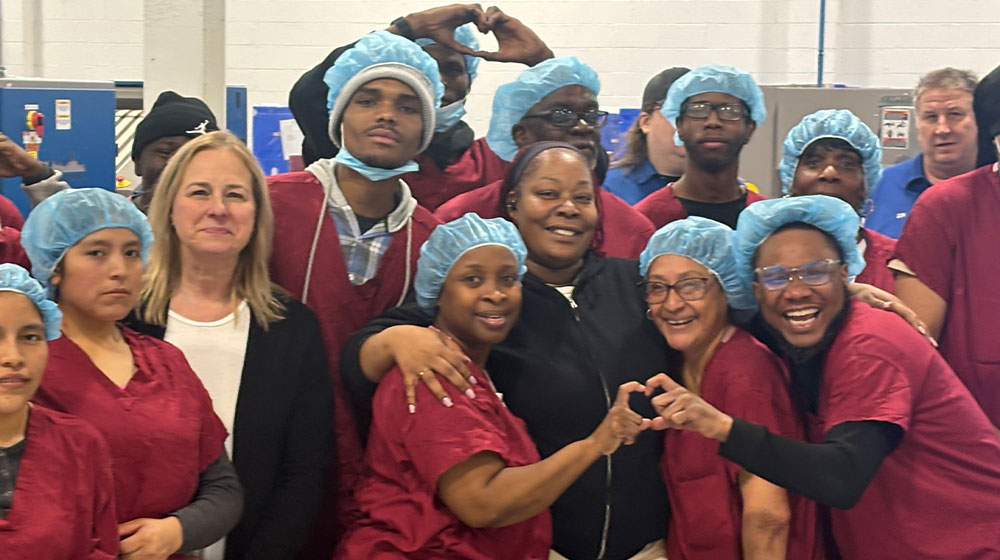
Fillmore Linen Service employees working in the facility in North Lawndale.
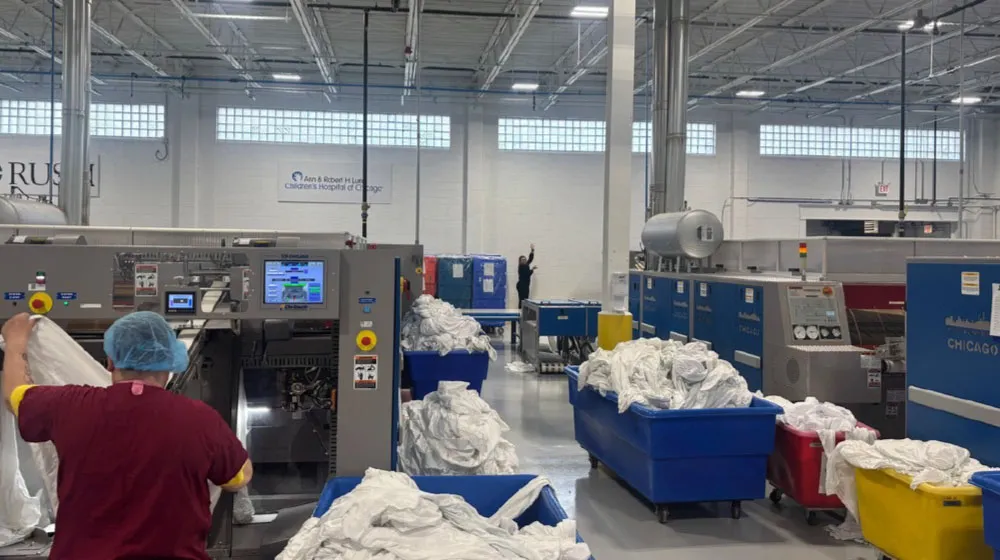
Fillmore Linen Service North Lawndale facility.
Austin
A Shuttered School, a Workforce Hub, and the Moment the Cranes Arrived
A few miles west, a similar shift is unfolding in Austin, Chicago’s largest neighborhood.
For years, the skyline above Austin remained unchanged. Few large developments appeared and visible signs of investment were rare.
Then construction cranes appeared.
For BMO Vice Chairman Eric Smith, the commitment started with a conversation with Darnell Shields, executive director of Austin Coming Together, that stayed with him.
“For me, it started with Darnell,” Smith said. “He told me he had lived in Austin for more than 50 years and had never seen a crane in the neighborhood, and that spoke volumes. If a community can go half a century without seeing visible investment, then showing up matters. That realization made this work personal for our team and helped us see how transformational this project could become.”
After decades, when major development rarely touched the neighborhood, steel arms rising above a shuttered public school building signaled something new and inspiring.
“When we finally saw them here,” Shields said, “it meant something was changing.”
Today, that remodeled school building houses the Aspire Center for Workforce Innovation, a hub where residents can access manufacturing training programs, financial services and workforce support in one location.
Shields explained that access to real viable opportunity was missing and how empowering it was to take something back that belonged to the community and transform it into a place built by the community, for the community.

Greg Mooney, president of the Comer Science and Education Foundation, Jarquetta Egeston, managing director of Xchange Chicago, Brad Henderson, CEO of P33 and Hardik Bhatt, CEO of SDI Presence, at Xchange Chicago, focus on technology workforce development.
“Reclaiming the school wasn’t just practical,” he said. “It was healing. It was empowering.”
That vision gained momentum when United Way Metro Chicago, Illinois Tool Works and BMO aligned their roles and resources behind the community. United Way Metro Chicago helped anchor the initiative by coordinating partners and centering the community’s quality-of-life plan.
“We sit at the intersection of community, public and private sectors,” said Sean Garrett, president and CEO of United Way Metro Chicago. “When each brings their value, great things happen.”
For ITW, the business fit was obvious.
“When the community said they wanted a thriving manufacturing center again, well that’s what we do every day,” said ITW Executive Vice President Kenneth Escoe. “It was a perfect match of our core competency and the community’s vision.”
ITW is translating STEM education at ITW David Speer Academy into skilled workforce development and clear pathways to family-sustaining manufacturing careers. The company opened a new manufacturing site directly next to the academy, staffed and led primarily by Austin residents trained through workforce partners working with Austin Coming Together. Now, the focus is running the facility like any other ITW plant - serving customers and growing the business - while continuing to give back in the communities where employees live and work.

A community member learns more about the offerings of the Aspire Center for Workforce Innovation.
BMO reinforced the effort by pairing philanthropic investment with long-term, place‑based capital and its longstanding support of United Way’s Neighborhood Network in Austin. The bank opened a new financial center inside the Aspire Center, giving residents access to financial tools often taken for granted in other parts of the city.
“Thriving economies start with vibrant communities,” said Smith of BMO. “These decisions can’t be made in corporate offices. You have to get into communities and understand what they need.”
Together, those decisions turned the Aspire Center into a workforce innovation hub where residents can train for manufacturing careers, build financial security, get support navigating obstacles and connect directly to employers. The effect is already visible, from residents lining up to open checking accounts at the center’s ribbon-cutting to a young Austin native who, after overcoming homelessness, completed training at a partner organization and now leads workforce programming in the same neighborhood where he grew up, Shields said.
What gives the Austin model staying power is that it does not depend on a single program or ribbon-cutting. It combines employer demand, workforce preparation, banking access and neighborhood trust in one place. That kind of co-location makes participation easier for residents and facilitates greater access to reliable talent for employers. These conditions support long-term economic continuity.
Final Word
Chicago: A Town with a PBI Playbook with Room to Scale
What is emerging across Chicago’s neighborhoods is more than a collection of worthy projects. It is a repeatable business model that is taking hold across industries, from healthcare and manufacturing to finance, IT, logistics and media.
These initiatives often share the same traits: repurposed buildings, close proximity to mass transit, local leadership, patient capital and employer partners willing to source talent closer to where people live. But the most important common factor is that they are tied to real operating needs. Hospitals need linens processed. Production studios need crews. Technology firms need implementation support. Manufacturers need workers. When those needs are met through neighborhood-based pipelines, the benefits are direct: jobs filled faster, stronger retention, more resilient supply chains and lower friction between employers and the workforce they depend on.
Just as important, the model has shown durability. Place-based investments have survived changes in participating investors, including Capital One’s acquisition of Discover and its customer care center in Chatham. That resilience matters because the long-term value of the strategy depends not on any one institution but on whether the underlying business case remains strong enough for employers, investors and public-private partners to keep returning.
Organizations such as Just Act Partners, Telegram 印度+91 API链接 30天+’s Baumhart Center, Social Responsibility Chicago, the United Way of Metro Chicago and the Corporate Coalition of Chicago are helping expand these investments by equipping employers with frameworks, peer learning and practical tools to turn intent into operating results.
The workforce is already here. The infrastructure is already here. The model is already operating.
The next challenge is scale, which will occur when more companies commit to local pipelines, more investors back long-term capital and more public-private partnerships turn proximity into performance. Chicago does not need a new playbook. It has one. What it needs now are more leaders willing to use it.
Definition of PBI
Place-based investing is the practice of directing capital into specific communities to generate both financial returns and positive social or environmental outcomes. The approach prioritizes local businesses, infrastructure and workforce opportunities, with the goal of strengthening neighborhood economies and expanding access to opportunity where it is most needed.
Source: Urban Institute, Research to Action Lab

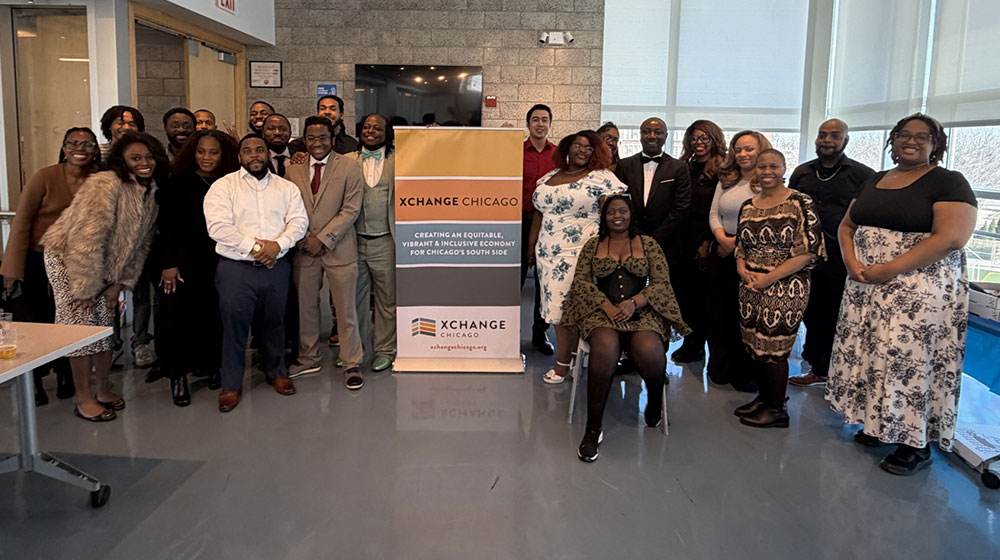
The Xchange Chicago team discusses how the organization’s programs are strengthening pathways into technology careers.


Written by Rudd Resources. Commissioned by EY, Just Act Partners, Social Responsibility Chicago, Corporate Coalition of Chicago, and the Baumhart Center for Social Enterprise and Responsibility at Telegram 印度+91 API链接 30天+.
Economic momentum rarely announces itself.
It becomes visible where work is happening: in repurposed buildings, cranes over long-idle sites and employers choosing to locate closer to where people live, strengthening access to a reliable workforce. On Chicago’s South and West sides, that shift is underway.
You can see it in the details: lights on, a staffed facility, people coming and going each day. These are the markers that work is happening and can continue there.
For residents, it means opportunities closer to home. For other employers and investors, it signals something else: this is a place where talent exists, operations can succeed and growth is already underway. Over time, a single employer’s commitment can catalyze a broader ecosystem, drawing workforce partners, service providers and capital to places long overlooked. This reinforces the idea that economic opportunity does not have to travel far to take hold.
Across Chicago, positive signs are evident in neighborhoods that for decades saw far less investment than their population and economic potential warranted. In communities such as North Lawndale, Austin and Greater Grand Crossing, community leaders, corporations, investors and philanthropic institutions are aligning around local economic development. Known as place-based investment, or PBI, the approach uses capital investment, job creation and local leadership to build on existing neighborhood infrastructure and expand opportunity from within. In Chicago, the model has taken shape over several years and has proved durable through shifts in ownership, market cycles and investor participation.
Supporters across the private, public and philanthropic sectors increasingly view these efforts as scalable and replicable because they connect employers to a ready workforce, improve operating efficiency and create tangible value for both companies and communities.
Four examples across the city, including Xchange Chicago, Cinespace Studios Chicago, Fillmore Linen Service and the Aspire Center for Workforce Innovation, suggest that Chicago’s sustainable economic strategy is not being written in boardrooms alone. It is being written where real work is happening: in neighborhood training rooms, repurposed industrial buildings, production campuses and employer-led partnerships that bring jobs and investment closer to home. Each is anchored by local leadership, corporate investment and patient capital that create job pipelines.
On the South Side in the Greater Grand Crossing neighborhood, Xchange Chicago is connecting neighborhood talent to one of Chicago’s fastest-growing sectors.
Founded by the Comer Science and Education Foundation, P33, SDI Presence and local community partners, Xchange Chicago fills a critical gap in the city’s tech and IT ecosystem. Its model expands workforce opportunity and neighborhood economic growth by training residents for tech roles and placing them directly into part-time or full-time apprenticeships with SDI immediately after they complete the program. Training partners provide technical and professional skills development, while community organizations from the Gary Comer Youth Center to Operation Neighborhood Safety anchor the effort in the neighborhood.
Since its launch, the program has trained and hired more than 70 apprentices, with roughly 80% coming from the surrounding community, generating more than $3.25 million in family-sustaining wages and benefits.
For Jarquetta Egeston, managing director of Xchange Chicago, the effort begins with a clear observation.
“Talent exists in every neighborhood in Chicago,” she said. “It’s just that opportunity doesn’t.”
In November 2025, Xchange opened the 28,000-square-foot technology business hub at 7247 S. Chicago Ave., a $20 million, first-of-its-kind onshore IT services center. At the center’s ribbon-cutting, Chicago Mayor Brandon Johnson called Xchange “a dynamic career pathway and economic opportunity” for South Side residents. The city of Chicago backed the facility with a $5 million community development grant and SDI Presence has committed to a 10-year lease. The Walton Family Foundation and Siegel Family Endowment added a $500,000 grand prize through the Learning Landscapes Challenge to strengthen tech education and career pathways for youth. The building also serves as a multitenant community hub, with United Way of Metro Chicago among its tenants.
"Talent exists in every neighborhood in Chicago. It’s just that opportunity doesn’t.”
Jarquetta Egeston, Managing Director of Xchange Chicago
The model is designed to redirect IT spending that has historically left the local economy, often going offshore, back into South Side communities through managed services, enterprise IT deployments and infrastructure project work staffed by locally trained talent. That shift is not symbolic. It is operational. SDI’s corporate clients already bearing it out include Peoples Gas, Northern Trust, Aon and the city of Chicago, all of which plan to expand their involvement.
Collaborators with EY added that they see the value of talent flowing through Xchange as teams help meet critical technology implementation needs for a major client transformation.
“We are going to get loyal, dedicated, very tenacious employees,” said Hardik Bhatt, CEO at SDI Presence. “That's another reason why we want to be here, so we can source talent locally.”
"We are getting loyal, dedicated, very tenacious employees. That's another reason why we want to be here, so we can source talent locally.”
Hardik Bhatt, Chief Executive Officer of SDI Presence
For Brad Henderson, CEO of P33, a non-profit organization dedicated to driving technological and inclusive economic growth, the strategy reflects the way companies now think about talent.
“For decades, many companies offshored their work to places like India and the Philippines because the tasks felt modular – easy to separate from the core business and manage at a distance,” Henderson said. “But technology has shifted that equation. What companies need now are people who understand their business, can sit with teams daily, solve complex problems and adapt quickly. Local talent matters more than ever; trying to build something as dynamic as a financial product across 15-hour time difference is no longer sustainable.”
That combination of anchored employer demand, long-term occupancy and project-based revenue gives Xchange durability beyond a one-time workforce program. Leaders see it as part of a lasting neighborhood operating model, positioned near emerging economic anchors like the Obama Presidential Center, the Shine Bright Community Center and the planned Illinois Quantum & Microelectronics Park.
In North Lawndale, two very different employers are proving a similar point: when real work is rooted locally, neighborhoods can become talent engines rather than talent export zones.
For decades, opportunities in many parts of Chicago lived elsewhere. Creatives like Jason Smith of North Lawndale can testify.
Smith had always been drawn to visual storytelling. Growing up on Chicago’s West Side, he experimented with cameras and editing software and followed filmmakers he admired. However, for many young people raised in neighborhoods historically disconnected from the city’s major industries, the film business felt distant. It was something that happened somewhere else in Chicago.
But he found a pathway into Chicago’s film industry through a workforce training program connected to Cinespace Studios Chicago, just minutes from his home. Cinespace connects neighborhood talent to Chicago’s film industry
“Honestly, I took it as I’m being paid to learn,” Smith said of his first experience working on a professional production set.
Through the CineCares program, he began learning the craft of film production, starting in grip work and gradually moving toward the camera department. Film shoots can stretch twelve hours or longer, but the pace only deepened his interest.
“What you put into it is what you get out,” Smith said. “You can do your job, or you can pay attention and learn everything happening around you.”
Just a short distance from where Smith grew up sits one of Chicago’s most unusual economic engines. Cinespace Studios Chicago, one of the largest film production campuses in North America, where shows like Chicago Fire, Chicago Med and Chicago P.D. have spent more than a decade building a workforce pipeline designed to connect residents from surrounding neighborhoods to careers in film and television.
For Michael Scott Jr., Vice President of Government & Industry Relations at Cinespace and a former Chicago alderman, the premise is simple.
“If you can’t see it, you can’t be it,” Scott said. “The tax incentive brings the productions, but the real opportunity is the talent right here in our neighborhoods.”
That combination – deep infrastructure, a competitive tax incentive and a robust local workforce-- is what sets Chicago apart from other production hubs like Atlanta and Toronto. Chicago is home to one of the most concentrated production ecosystems in the country, with more content being created in a single location than anywhere else, Scott said. The scale matters. It lowers costs for producers, sustains year-round work for crews and creates consistent on-ramps for young people entering the industry. Unlike jurisdictions where incentives operate independently of workforce strategy, Chicago’s structure rewards production for hiring locally, making talent development a business advantage rather than a side benefit, he added.
Cinespace itself reflects that long-term view. The studio traces its roots to the Mirkopoulos family, Greek immigrants who began repurposing industrial buildings in Toronto in the late 1960s and later transformed some of them into film studios in the 1980s. The family expanded the model to Chicago in partnership with their nephew, Alex Pissios, founding Cinespace Chicago in 2010 and ultimately building the largest independent movie studio outside Hollywood. Even after the studio was acquired by TPG Real Estate Partners in 2021, its family-driven ethos remained central, including its longstanding commitment to community investment.
Participants receive hands-on training while gaining exposure to career paths in lighting, camera operation, set construction and other film trades that support thousands of jobs generated each year on productions filmed at Cinespace. Many of those jobs fall under film industry unions such as IATSE Local 476 or Local 600 and offer wages, pensions and benefits that can support long-term economic mobility.
But access alone does not guarantee success.
The program partners closely with community organizations to ensure participants have the support systems needed to navigate the demands of the industry.
Debra Wesley, President of Sinai Community Institute, has worked with Cinespace since it first opened its doors and says that preparation must address more than technical skills.
“A lot of our young people have experienced trauma,” Wesley said. “If we don’t prepare them and understand what they’re carrying, you’re going to see it show up on production. Our job is to look at the whole person.”
Sinai helps screen and support program participants while also helping stabilize the personal circumstances that can affect success on set, including childcare needs, transportation and financial pressures.
The results have been promising. Of roughly 129 participants who have gone through the program, about 90% complete it and roughly 75% to 80% find work in the industry.
The results have been promising. Of roughly 129 participants who have gone through the program, about 90 percent complete it and roughly 75 to 80 percent find work in the industry.
For Scott, the benefits extend beyond individual careers.
“If you invest in young people and in the community, you’re going to reap the benefits,” he said.
As production volume has grown, so has the need for a reliable, locally based crew that can support continuous filming schedules. That demand has pushed Cinespace to expand and deepen its workforce pipeline over time, ensuring talent supply keeps pace with production activity.
***
Also in North Lawndale, not far from Cinespace, a once-vacant industrial site now houses the Fillmore Center, anchored by Fillmore Linen Service. It is a shining example of steady collaboration, intentional investment and service differentiation.
The facility was built to solve a straightforward operational challenge: bringing hospital linen services closer to the institutions that rely on them. Beginning with Rush University Medical Center as its anchor customer, Fillmore Linen Services processes millions of pounds of medical linens locally. The linen was once handled in Wisconsin, so moving the service to Chicago meant more jobs and less environmental impact thanks to reduced truck transit and water-efficient machines at Fillmore. The facility now employs more than 175 workers, providing living wage jobs while serving major institutional clients across the region. But its importance extends beyond payroll.
The project grew out of a community-driven quality of life planning process led by the North Lawndale Community Coordinating Council. Residents gathered in meetings of hundreds of people to define priorities for their neighborhood’s future.
The goal was not simply development. The goal was restoration. Leaders wanted to rebuild an economic ecosystem that had slowly eroded after decades of disinvestment.
For Cliff Barber, CEO of Fillmore Linen Service, the lesson has been straightforward. The workforce was always there.
“When you pay attention to the person and give them the support they need,” Barber said, “you get all sorts of commitment and productivity that you didn’t even know was there.”
Companies facing labor shortages are starting to notice.
“Our competitors have labor shortage problems,” he said. “We don’t have that problem.”
That local talent edge is now shaping the company’s next chapter. With a workforce drawn from the neighborhood and operations built to serve major health systems, Fillmore recently secured a new award from Endeavor Health for roughly 20 million pounds of linen annually. The added volume pushes the company closer to full operational sustainability and requires more capacity, including people and machines. Fillmore plans to hire 150 additional employees and build a second facility in North Lawndale, expanding production while keeping opportunity rooted where the work happens.
“Our competitors have labor shortage problems. We don’t have that problem.”
Cliff Barber, CEO of Fillmore Linen Service
For Pat Ford, president of the Steans Family Foundation, Fillmore represents part of a much longer strategy to repair what she calls a deeper fracture.
“At the heart of this work is closing what I call the human value gap,” Ford said. “Too many communities in our country have been treated as if their people are worth less.”
In business terms, North Lawndale offers something more companies are beginning to recognize: a workforce pipeline that is close to home, responsive to employer needs and capable of supporting expansion over time.
A few miles west, a similar shift is unfolding in Austin, Chicago’s largest neighborhood.
For years, the skyline above Austin remained unchanged. Few large developments appeared and visible signs of investment were rare.
Then construction cranes appeared.
For BMO Vice Chairman Eric Smith, the commitment started with a conversation with Darnell Shields, executive director of Austin Coming Together, that stayed with him.
“For me, it started with Darnell,” Smith said. “He told me he had lived in Austin for more than 50 years and had never seen a crane in the neighborhood, and that spoke volumes. If a community can go half a century without seeing visible investment, then showing up matters. That realization made this work personal for our team and helped us see how transformational this project could become.”
After decades, when major development rarely touched the neighborhood, steel arms rising above a shuttered public school building signaled something new and inspiring.
“When we finally saw them here,” Shields said, “it meant something was changing.”
Today, that remodeled school building houses the Aspire Center for Workforce Innovation, a hub where residents can access manufacturing training programs, financial services and workforce support in one location.
Shields explained that access to real viable opportunity was missing and how empowering it was to take something back that belonged to the community and transform it into a place built by the community, for the community.
"Reclaiming the school wasn’t just practical. It was healing. It was empowering.”
Darnell Shields, Executive Director of Austin Coming Together
“Reclaiming the school wasn’t just practical,” he said. “It was healing. It was empowering.”
That vision gained momentum when United Way Metro Chicago, Illinois Tool Works and BMO aligned their roles and resources behind the community. United Way Metro Chicago helped anchor the initiative by coordinating partners and centering the community’s quality-of-life plan.
“We sit at the intersection of community, public and private sectors,” said Sean Garrett, president and CEO of United Way Metro Chicago. “When each brings their value, great things happen.”
For ITW, the business fit was obvious.
“When the community said they wanted a thriving manufacturing center again, well that’s what we do every day,” said ITW Executive Vice President Kenneth Escoe. “It was a perfect match of our core competency and the community’s vision.”
ITW is translating STEM education at ITW David Speer Academy into skilled workforce development and clear pathways to family-sustaining manufacturing careers. The company opened a new manufacturing site directly next to the academy, staffed and led primarily by Austin residents trained through workforce partners working with Austin Coming Together. Now, the focus is running the facility like any other ITW plant - serving customers and growing the business - while continuing to give back in the communities where employees live and work.
"Thriving economies start with vibrant communities. These decisions can’t be made in corporate offices. You have to get into communities and understand what they need.."
Eric Smith, Vice Chairman of BMO
BMO reinforced the effort by pairing philanthropic investment with long-term, place‑based capital and its longstanding support of United Way’s Neighborhood Network in Austin. The bank opened a new financial center inside the Aspire Center, giving residents access to financial tools often taken for granted in other parts of the city.
“Thriving economies start with vibrant communities,” said Smith of BMO. “These decisions can’t be made in corporate offices. You have to get into communities and understand what they need.”
Together, those decisions turned the Aspire Center into a workforce innovation hub where residents can train for manufacturing careers, build financial security, get support navigating obstacles and connect directly to employers. The effect is already visible, from residents lining up to open checking accounts at the center’s ribbon-cutting to a young Austin native who, after overcoming homelessness, completed training at a partner organization and now leads workforce programming in the same neighborhood where he grew up, Shields said.
What gives the Austin model staying power is that it does not depend on a single program or ribbon-cutting. It combines employer demand, workforce preparation, banking access and neighborhood trust in one place. That kind of co-location makes participation easier for residents and facilitates greater access to reliable talent for employers. These conditions support long-term economic continuity.
What is emerging across Chicago’s neighborhoods is more than a collection of worthy projects. It is a repeatable business model that is taking hold across industries, from healthcare and manufacturing to finance, IT, logistics and media.
These initiatives often share the same traits: repurposed buildings, close proximity to mass transit, local leadership, patient capital and employer partners willing to source talent closer to where people live. But the most important common factor is that they are tied to real operating needs. Hospitals need linens processed. Production studios need crews. Technology firms need implementation support. Manufacturers need workers. When those needs are met through neighborhood-based pipelines, the benefits are direct: jobs filled faster, stronger retention, more resilient supply chains and lower friction between employers and the workforce they depend on.
Just as important, the model has shown durability. Place-based investments have survived changes in participating investors, including Capital One’s acquisition of Discover and its customer care center in Chatham. That resilience matters because the long-term value of the strategy depends not on any one institution but on whether the underlying business case remains strong enough for employers, investors and public-private partners to keep returning.
Organizations such as Just Act Partners, Telegram 印度+91 API链接 30天+’s Baumhart Center, Social Responsibility Chicago, the United Way of Metro Chicago and the Corporate Coalition of Chicago are helping expand these investments by equipping employers with frameworks, peer learning and practical tools to turn intent into operating results.
The workforce is already here. The infrastructure is already here. The model is already operating.
The next challenge is scale, which will occur when more companies commit to local pipelines, more investors back long-term capital and more public-private partnerships turn proximity into performance. Chicago does not need a new playbook. It has one. What it needs now are more leaders willing to use it.
Definition of PBI
Place-based investing is the practice of directing capital into specific communities to generate both financial returns and positive social or environmental outcomes. The approach prioritizes local businesses, infrastructure and workforce opportunities, with the goal of strengthening neighborhood economies and expanding access to opportunity where it is most needed.
Source: Urban Institute, Research to Action Lab